Just go FBO E30, man

Just trust me, bro. No point reading this guide. FBO E30 is where it's at.
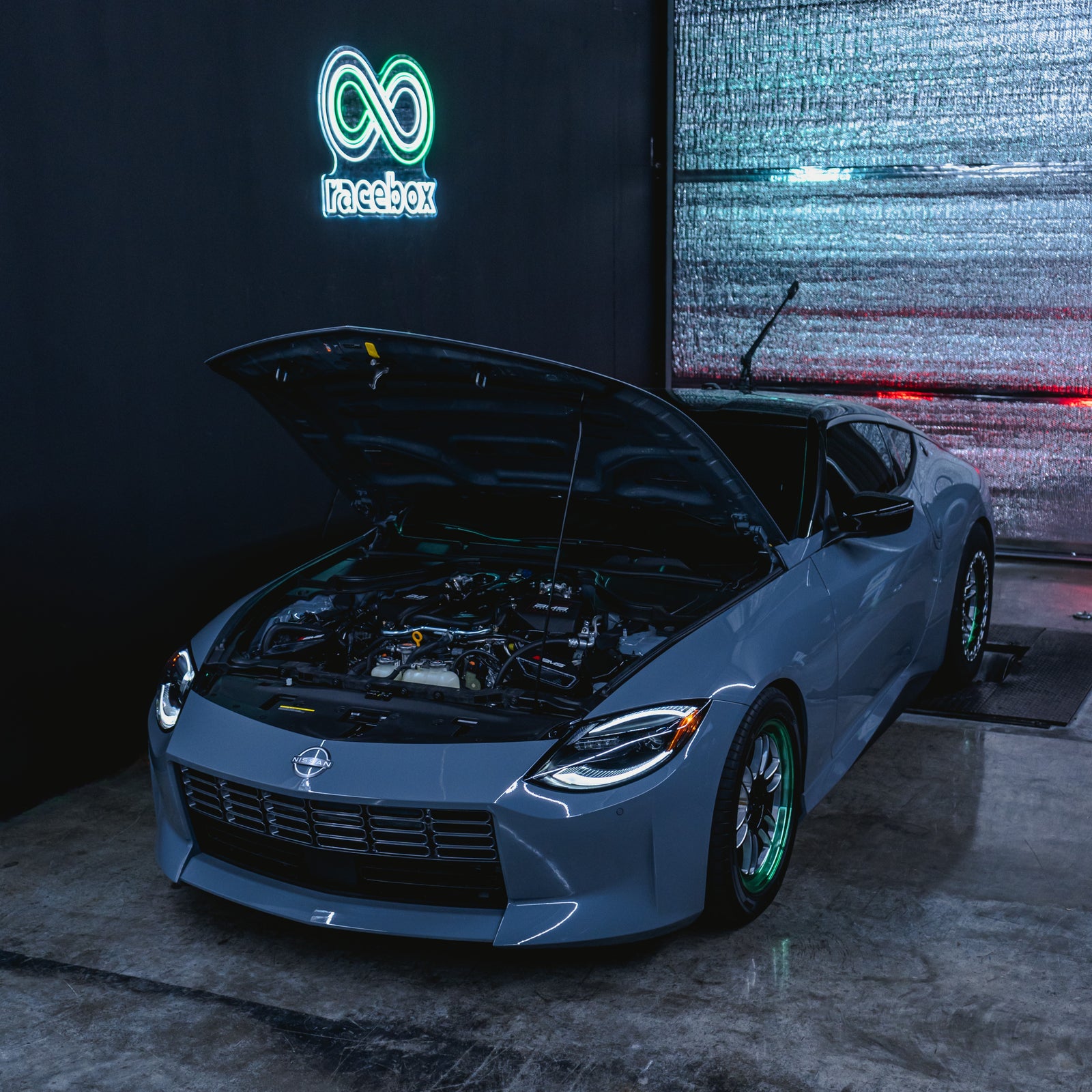
I'm just kidding, I wrote this whole guide so you can decide for yourself. While I am being facetious, we do find that FBO E30 on a VR30 is the sweet spot for cost, performance, and reliability. I've personally modified my Q50s from stock to FBO E85 to upgraded turbos, the whole nine yards. The MOST fun I've ever had with my Qs has been FBO E30. Same with the Z.
It's fun to build a 700whp VR30, and I will walk you through that in this guide as well, but I hope you take my advice and at least enjoy FBO E30 for a while before dumping a bunch of money into upgrading turbos.
The basics
Heat Exchanger

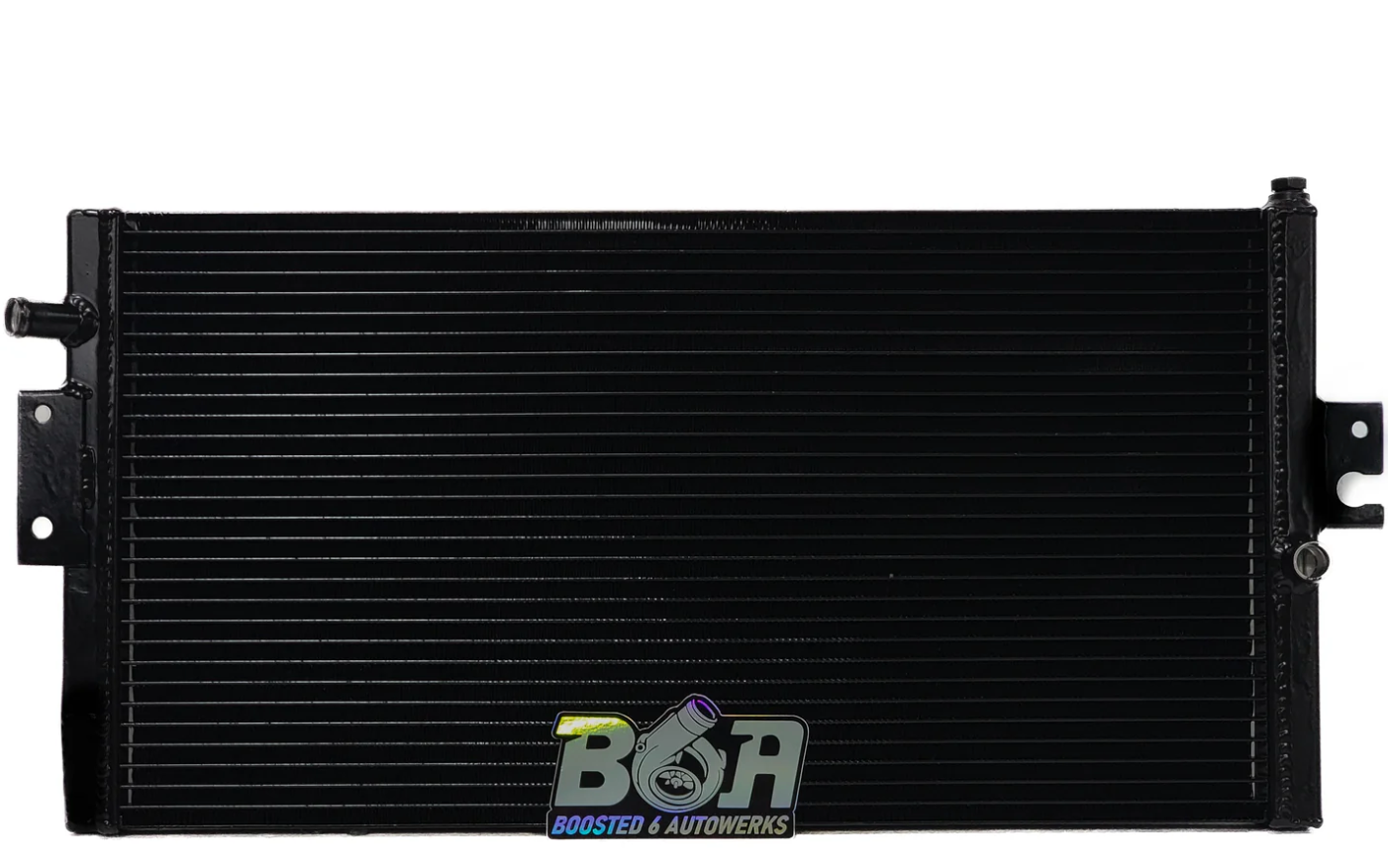
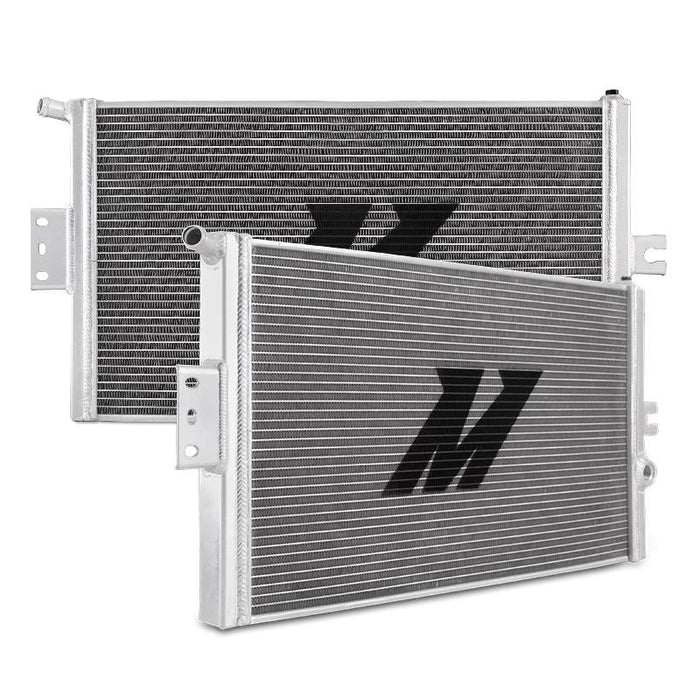
Start with a heat exchanger. This is the first mod for every VR30. The stock HX is tiny, and if you have a non-Redsport model you only have a single pump vs dual. Less pumps = less flow rate = longer recovery for charge air temps. For those of you coming from another platform, the VR30 on EcuTek reports the post-intercooled charge temperature as "Charge Air Temperature" rather than IATs.
Upgrading the HX to something like the B6A HX or Mishimoto HX benefits you in two major ways: larger core means a larger fluid capacity, so it takes longer to heat soak; and a larger core means more surface area which means it recovers faster.
Z owners: those two heat exchangers are Q50/Q60 only and won't fit the Z. Grab one that's listed for the RZ34. Same reasoning, same first mod.
Upgraded Pulley & Belt
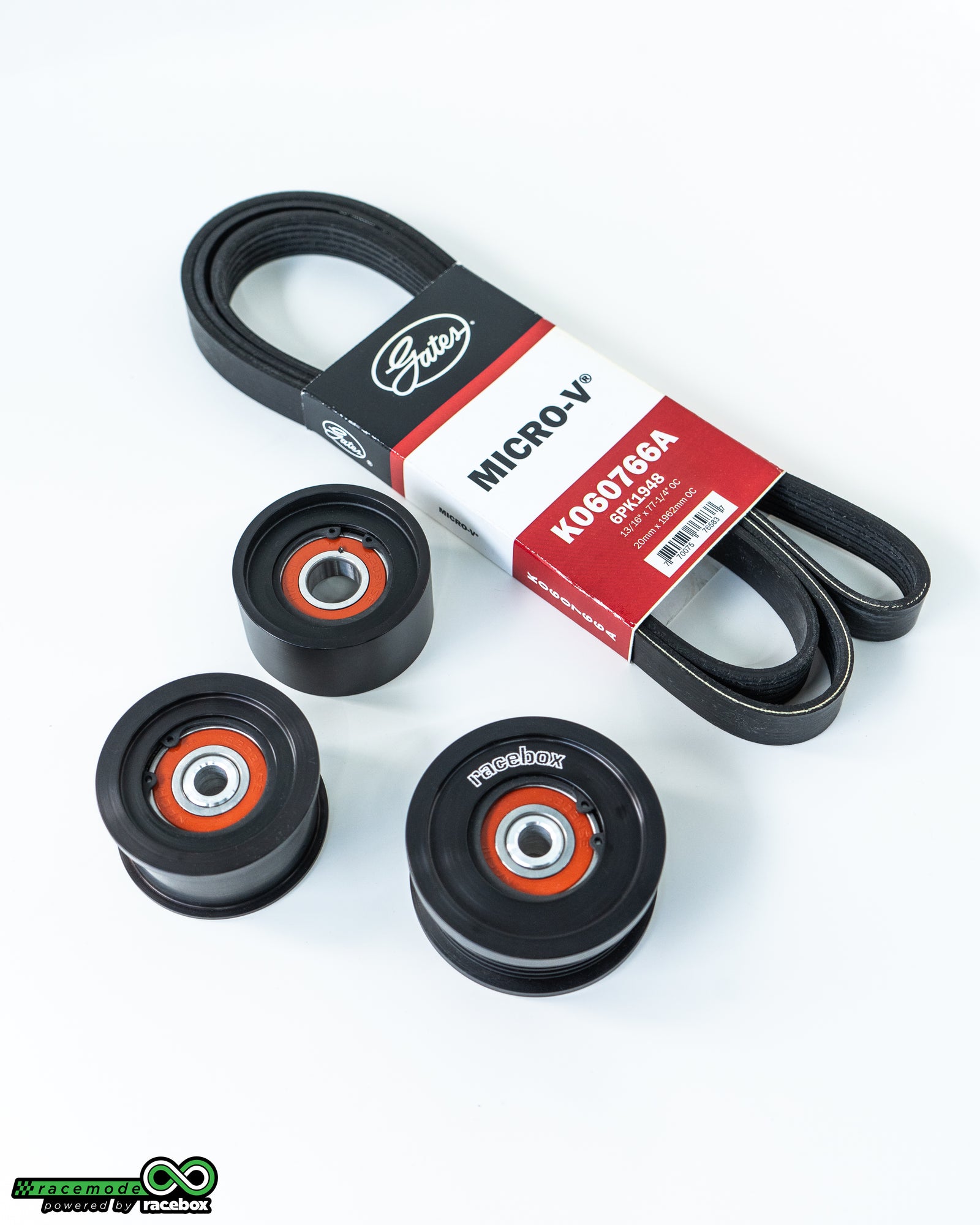
While you're in the front of the motor, handle the belt situation. The VR30 is notorious for belt slip (there's a literal TSB for it), and if your belt shreds at high RPM it will take out a lot of things in the engine bay with it, most critically the oil pressure sending unit which if its hit hard enough will result in you dumping oil out. We highly recommend our Racebox x NST upgraded pulley kit paired with a fresh Gates belt (both fit the 2023+ Z too). The upgraded pulleys keep the belt tracking true and put an end to the slipping and shredding for good.
Racebox OTS Tune
The next obvious upgrade is an EcuTek dongle with our OTS tune. This allows you to enjoy a modest bump (390-410whp depending on mods) and also get the host of logging features available through EcuTek so you can monitor the health of your car. Full pricing and options are on our VR30 tuning page.
Full Bolt-on (FBO)
Unlike BMWs and other German competitors, you can't just do "DP/tune" on a VR30 because the stock hardware is severely neutered from factory. The stock exhaust is as small as 1.5" diameter in some places, and as mentioned above, the stock charge cooling leaves something to be desired. As a result, you have to go straight to full-bolt-on status (FBO).
Downpipes
But as always, we start with the downpipes. The VR30 has a 2-piece catalytic converter system, like an S58. The "lower" cats are especially restrictive and we highly recommend replacing these with an aftermarket section. Fortunately, replacing just the lowers keeps the car emissions compliant and you will still be road legal. Also, sticking with lower downpipes means you'll see less condensation coming out of the exhaust when it's colder outside, which means less calls to us about "omg my car is smoking after downpipes!!!" But really, the cats help trap a lot of that condensation smoke as well as the little amounts of oil that may burn on a higher mileage motor/turbos.

Catback Exhaust
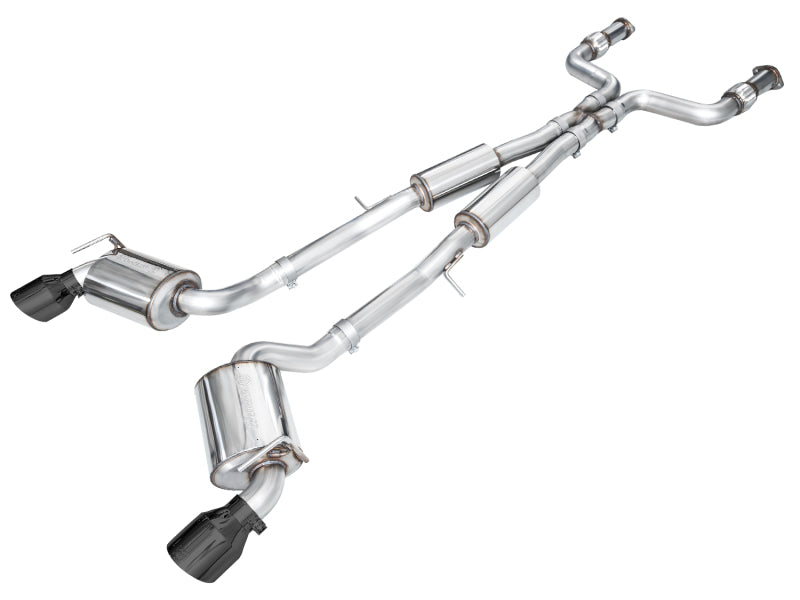
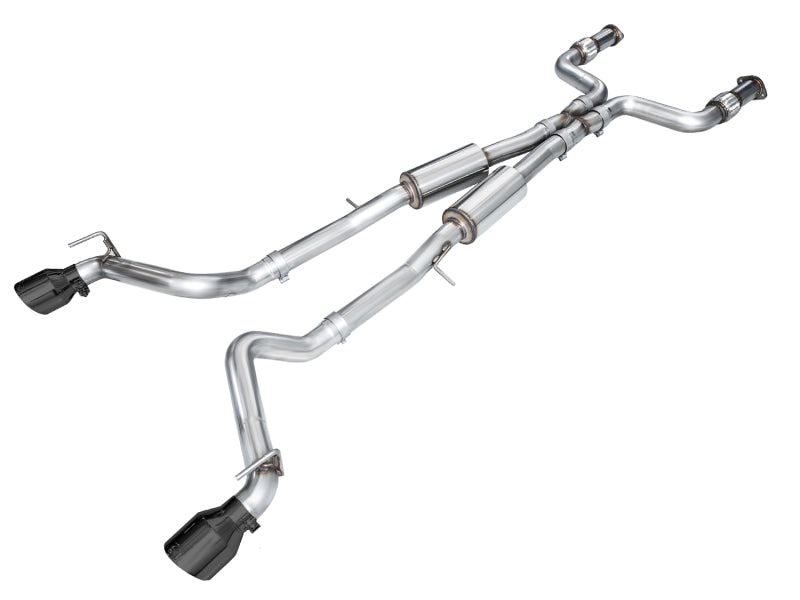
Next grab a catback of your choice. The best performing catbacks generally do not sound great, so you're always trading off. However, for a stock turbo car, something like a Fast Intentions 2.5" Touring sounds excellent. It's not too loud, has no rasp, and looks great. If you're okay with the car sounding loud and raspy WOT but want something quiet for daily driving, check out our valved exhaust that lets you close everything up for regular driving.
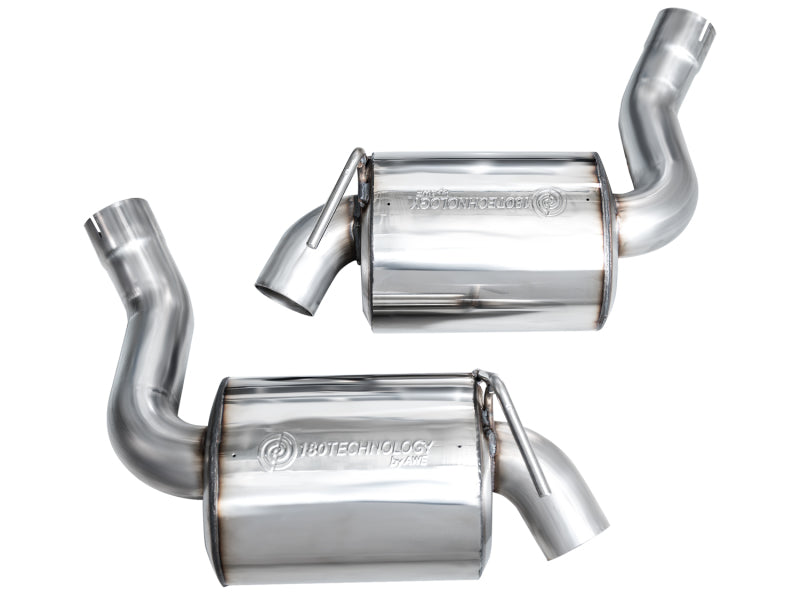
Z owners: our valved exhaust is Q50 only. For the Z, the AWE Touring Edition is a full 3" dual setup with drone-canceling resonators, so it stays civil at cruise. The AWE Track Edition drops those resonators if you want it louder, and AWE sells a Track-to-Touring conversion kit if it turns out to be too much.
Intakes
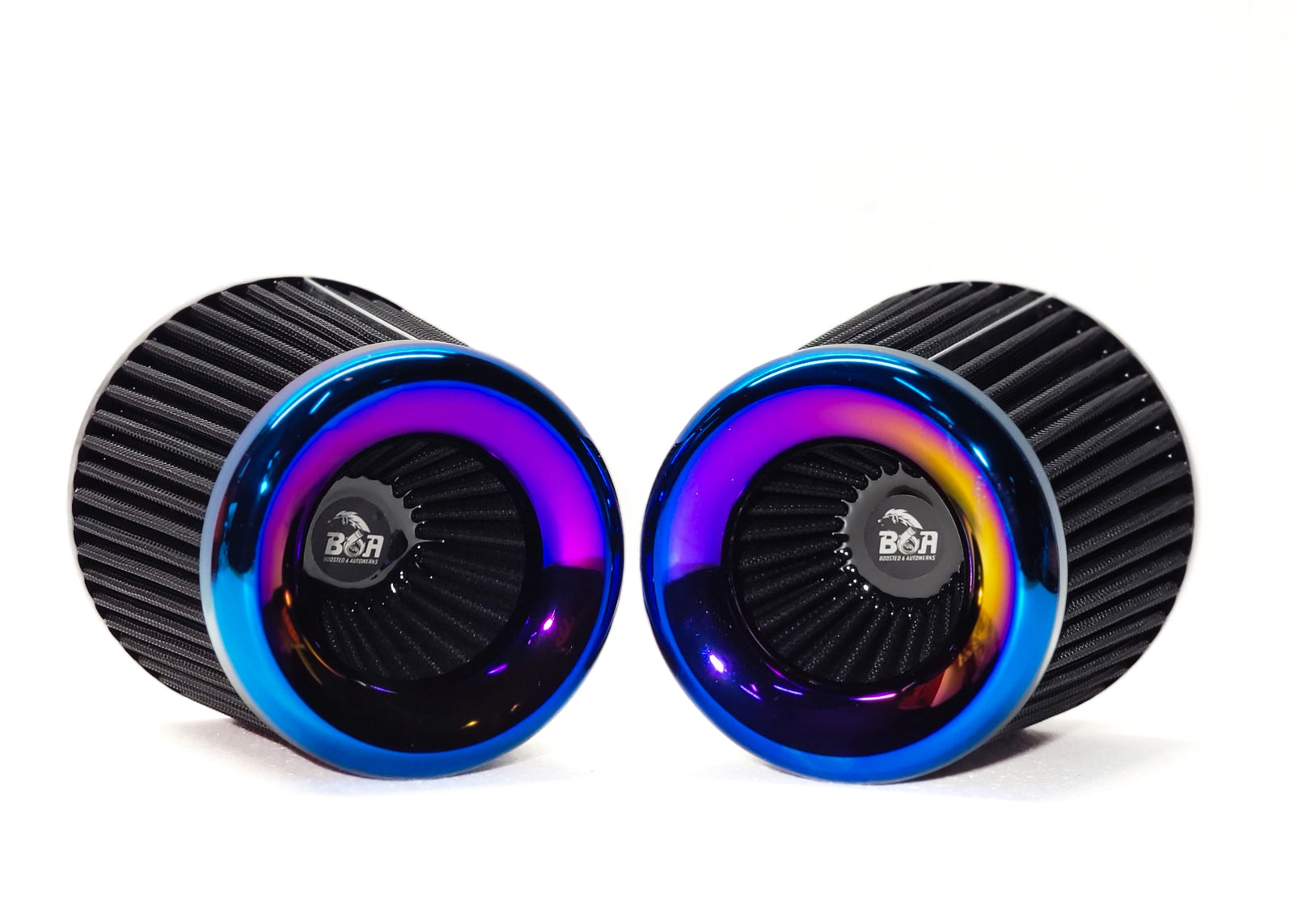
To complete FBO status, you want to grab a set of intakes. We've tested different intakes back to back on our dyno, and have a full review on YouTube. My preference is the B6A shorties with the 2.5" MAF adapter left in - they are easy to install, sound amazing, and retain the 2.5" MAF so you can always flash back to stock and still drive the car without needing to swap parts.


So, to recap, FBO is, in this order: LDP + HX + Catback exhaust + Intakes. A little more than just DP/tune, but you're just adding parts to give the VR30 a fighting chance. It's a very potent motor and the turbos do really well when allowed to breathe.
Finish it off with a custom EcuTek tune from us and you're looking at 420-440whp on 93 octane.


Low Pressure Fuel Pump (LPFP)
The one fuel mod worth planning for while you're doing FBO is the low pressure pump. The stock LPFP is fine on pump gas, but the second you start adding ethanol it turns into a limiter. Even on some cars running just 93, the stock fuel pump can't keep up. It's likely just due to age but we've seen some cars do it with low miles, which points to a quality issue from Infiniti/Nissan. A simple Walbro 450 drop-in covers stock-turbo power on E30 and full E85. If you already know bigger turbos are coming down the road, step up to something bigger, but the install and complexity get difficult. If you're planning on running PI you'll want a separate pump altogether anyway.
Z owners: use the B6A Nissan Z (RZ34) drop-in instead. Same idea, Z-specific basket.
Spark Plugs
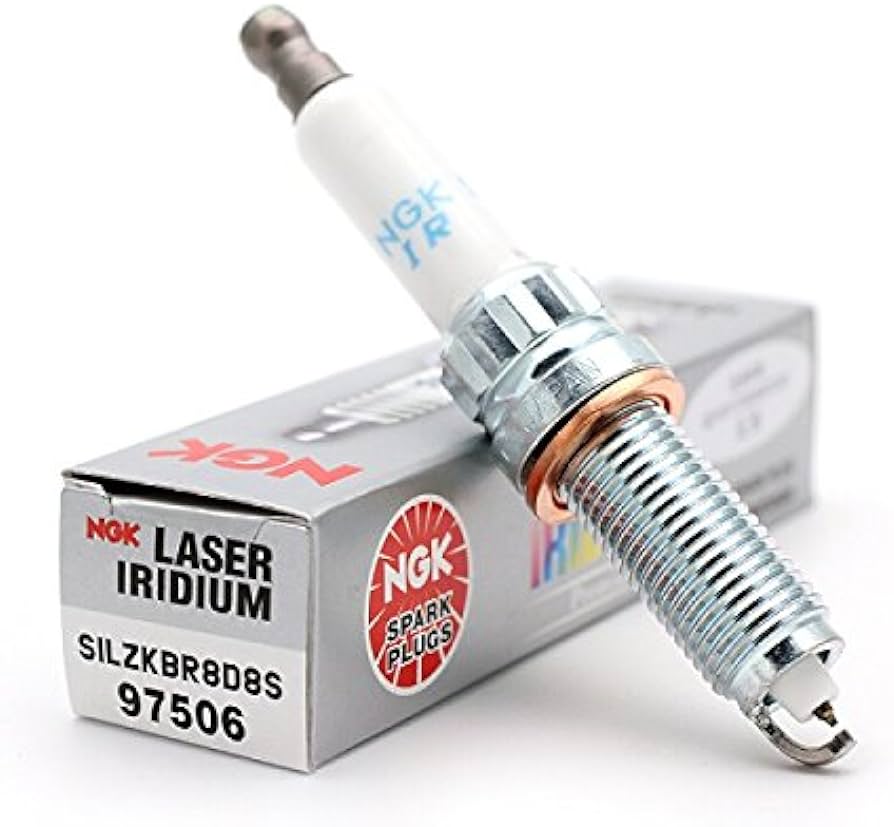
Once you're making more power on boost, throw in a fresh set of plugs. We run the NGK 97506 on our FBO VR30s. One install tip: they sit really tight in the coil boots, so put a little dielectric grease on the boot before you press the coils back on. It helps them seat and makes them easier to pull next time.
Throw some E('s) on it
I doubt any of you reading this will get my poorly orchestrated reference to what is quite possibly the pinnacle of modern music, but if you did, congrats, you're old like me.
Anyway, this is where the VR30 really gets fun. Gasoline tunes are knock limited and we can't really open up your car. If you have really good 93 around you, you might hit 450ish (only a handful of cars really achieve this), but in many cases 93 quality varies and of course many of you can only run 91. Ethanol is the great equalizer, and for those of you in the United States (~90% of our customers), we've got a TON of corn juice around the country. Use an app like the DoE's Alternative Fuel Finder to locate an E station near you.
Grab a flex fuel kit from B6A, pair it with a custom E30 tune from us, and you've instantly unlocked another 30-40whp on your car (Z owners, the Z gets its own CAN-bus flex fuel kit). Nearly every healthy car on E30 makes 470whp. Other than the extra hp, you benefit from a cleaner burn and more consistent results. I'm not going to go too deep into why E is so good for turbo cars, but I'll summarize: ethanol has way higher knock resistance than pump gas, so we can run more timing and more boost without the motor pinging itself to death, and it has a big cooling effect when it vaporizes in the intake charge. Cooler, denser air plus more aggressive timing is more power, and it makes it while running safer.
The reason we say FBO E30 is the sweet spot is that this is where you start to hit diminishing returns. We recently finished our FBO E30 build on the shop Q and spent just under $5,000 including the tune. For $5,000 you go from 270whp (non-RS) or 360whp (RS and Nissan Z, same 400hp motor) to 470whp. 200whp for $5,000.
The next steps would be getting secondary PI installed (no point going upgraded DI anymore) for around $4,500 and running full E85. That gets you another 20-30whp and brings you to 490-500whp. After that, you need bigger turbos. Depending which route you go, you're looking at anywhere from $3,500 to $5,500 + roughly $3,000 in labor. On the high end, that's $8,500 for VRX70s installed and gets you to 700whp.
Let's break that down. For a stock lux, you gain 200whp going FBO E30 for $5,000. That's roughly $25/hp. After that it's another $4,500 to get to 500whp on stock turbos - a 30whp increase at a whopping $150/hp. If you just go straight to big turbos and go right to the top end you go from 470whp to 700whp for roughly $11,500. You gain 230whp at a more reasonable (but still high) cost of $50/hp. That's called diminishing returns. It's just not worth it, for most of you, to dump that kind of money into the car.
Unless you're chasing times, racing, or really, really want to flex on your boys, there's no need to do all that. The car is the most fun to drive on stock turbos, since they're peppy and have almost no lag. Every turbo upgrade has a meaningful turbo lag that takes away from the driving enjoyment. That's not to say it's not fun, it's just very different. We always recommend people stick to the FBO E30 phase for at least a few months before skipping past it to upgraded turbos. Anyway, I'm off the soapbox. Let's keep going.
Throw some MORE E on it
As mentioned above, your next step after FBO E30 is FBO E85. So you need to upgrade the fuel system to support full E. Here's where you have to make a decision: will you be happy with stock turbo power? If so, just grab a Stage 3 HPFP and an upgraded LPFP and call it a day. We can run full E on stock injectors with stock turbos.
But, if you think there is ANY chance that you will want upgraded turbos, and you want to maintain the ability to run full E without blending at any power level, you need to consider PI. For around $4,500, you get PI with infinitely upgradeable injector options. You can run full E on stock turbos, and unlike a DI upgrade, you can also run full E on big turbos. If you're on the fence about it, just do PI.
Z owners: the Stage 3 HPFP is the same part, but grab the Z LPFP and the B6A Nissan Z (RZ34) PI kit.
Upgraded turbos
We've tested and tuned literally every VR30 setup out there. The best is of course a custom kit with G25-550 or 660s, like QZilla which at the time of this article owns the record for the quickest VR30 in the world. Quickest in any chassis, built motor or not. It will hold the stock motor record for a very long time, we're sure.
Anyway, the more realistic options for most of you are going to be hybrids. Remember, the motor has to come out to install turbos on VR30s, so factor about $3k of labor when considering going down this path.
But first: a word on exhausts

Okay, so long as you are stock turbo, being LDP only with a 2.5" catback doesn't hurt much. But as soon as you go upgraded turbos, you need to start reducing some of the restriction. We don't have a separate turbo manifold like many other turbo cars (B58s, for one) and so we can't remove the restriction there - it's integrated into the head and is unfortunately very restrictive. Our only option on a VR30 is to remove restrictions downstream of the turbo/manifold, which is the downpipes and exhaust. If you're going upgraded turbo and want to extract the most power safely without getting insane backpressure (this is what kills motors), you need to consider going 3" FDP and 3" exhaust at this point. On the Z, the MBRP 3" Armor Pro is the 3" option.
Z1 VRX Series
Any of the Z1 VRX series turbos are great. They come in three flavors, the 60, 70 and 80. Each have slightly different sizes to promote low end spool vs top end power. The 60s spool about 500rpm faster than the 70, which spool 500rpm faster than the 80. Customers seem to enjoy the VRX60s because they maintain more of the peppiness that makes the stock turbos so much fun. In reality, for most stock motor guys, VRX60s are enough since you can hit 700whp on them. 70s you can hit 750, and 80s you can hit 800 but realistically their potential is capped on a stock motor.
Z owners: get the Z versions, the VRX70B for the 2023+ Z or the VRX80B for the 2023+ Z. The Pure Stage 2 and R/T hybrids below aren't available for the Z.


Pure Stage 2 Turbos
Pure Stage 2s are a hybrid option that slots in between a full VRX bolt-on and the milder R/T setup. They're built on your stock cores (you send your turbos in for the upgrade, or send your cores back for a core refund), so there's no fabrication and they bolt right back up in the factory location. The bigger wheels make solid power over stock turbos while holding on to more of the quick stock-turbo spool than a full bolt-on kit, which makes them a nice middle ground for someone who wants more than an R/T stage 1 but isn't ready to jump straight to VRX power. They're also easier on the wallet. The downside is that the big wheels stuffed into the stock housing result in the stock wastegate door being undersized - this means you cannot bleed off enough boost at higher RPM. It's a problem on 93 when you've got turbos that are making 21+ psi while we're commanding the gates fully open - you're knock limited and 93 will start knocking very badly at those boost levels. But if you're okay with the risk and won't go WOT on 93, and will run full E anyway, the PS2 are good for 600-650whp. Hit us up and we'll help you figure out if they're the right call for your goals.
R/T Stage 1 Hybrids
R/T also still makes their stage 1 hybrids, which are a compressor wheel only upgrade. They've been great, I have run them on my cars over the years and customers have as well. They maintain a lot of the stock characteristics, and are very happy at around 560-580whp.
What else daddy?

Drive your car. Honestly, none of the mods matter if you don't practice. We have stock turbo customers that have run 10.2s 1/4 mile and 750whp VRX70 customers that run 10.6s.
Then we have customers like Dan and Eme that run their cars constantly and send us consecutive Dragys where the time improves by 1 second or more just purely through them getting better at brakeboost, finding roads where they can hold traction, adjusting tire psi, and shifting at the right RPM (this part is easier now on the Qs because of the Q50/Q60 TCM tune).
Just get out there, learn how it drives, get a dragy, practice launching and rolls, and enjoy it. Replace drivetrain parts when they break, but honestly the Q rear end is stout. The Z will end up breaking things if you don't upgrade the bushings and mounts in the rear early on (ask me how I know, it's all in our Nissan Z build). But the Qs are stout. Just get a good set of sticky tires and go enjoy.
As always, hit us up for any build questions. We've got you.