The Racebox S58 Tuning and Build Guide

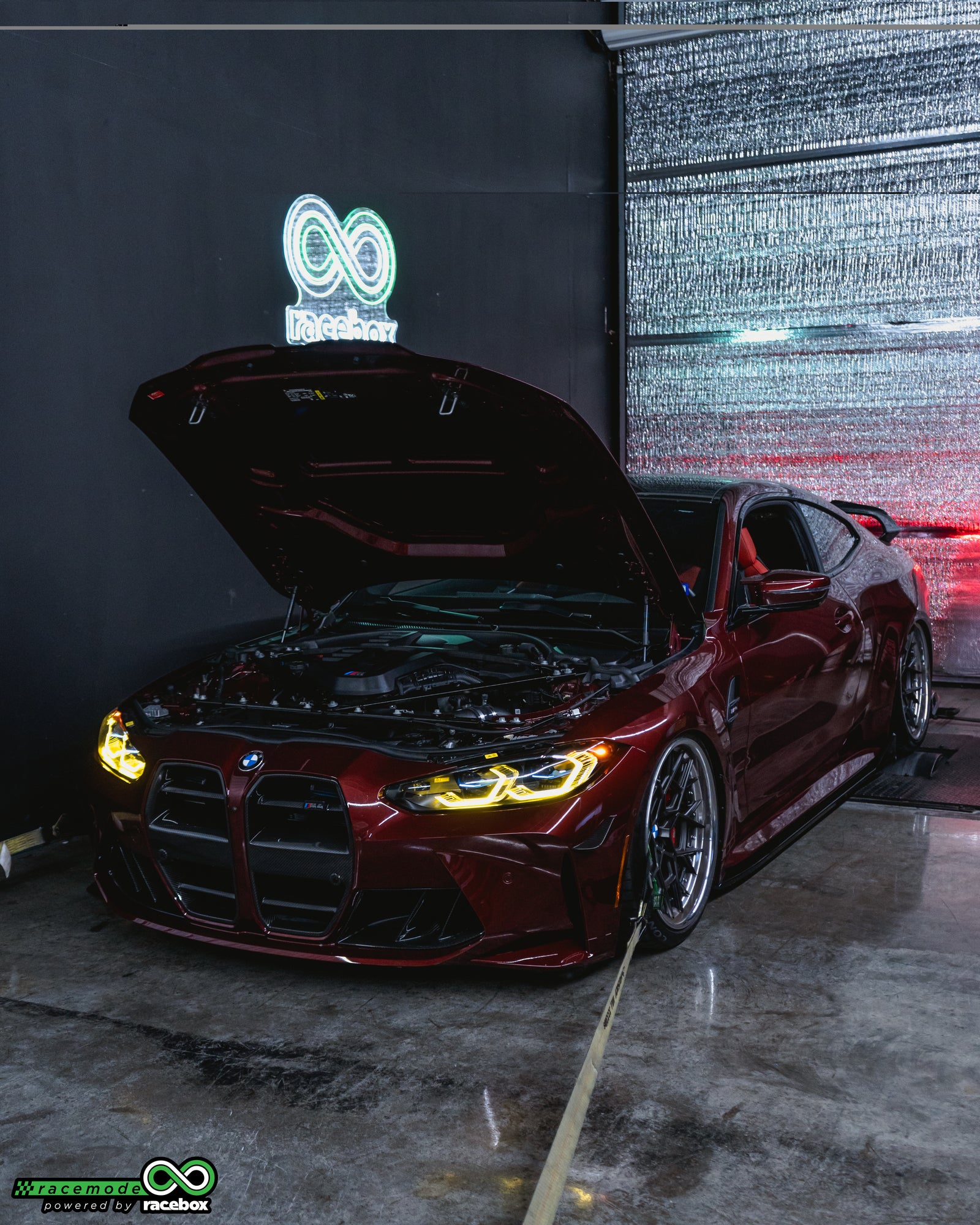
A Racebox-tuned G82 M4 strapped to the Dynojet
The S58 is the king of stock turbo street cars these days. There's really no comparison when it comes to "a downpipe and tune" build. Of all the sports cars for sale today, there are none under $200k that can run a mid 5s 60-130, mid to high 9s 1/4 mile, with just a downpipe, tune and splash of ethanol.
A new Porsche 911 Turbo S hits mid 5s on 93 and even faster on E, but good luck finding one for under $250k. An older 991.2 might hit 5s on stock turbos, but even those are going for $140k+.
Indeed, the S58 in the G80, G82, and G87 is a performance bargain. People disagree, and it's true that you can buy a $25k clapped out Mustang and toss another $40k at it and have a reliable, 1500whp monster, but that comparison falls short on two points: firstly, it's no longer a stock car with just 2 mods, secondly, it's not a BMW M3.
Anyway, over 90% of our S58 customers stay with a stock turbo build, with power figures ranging from 700-750whp, and a large majority of those literally just do a downpipe and tune. But everyone gets the mod bug eventually, so here's our tuning and build guide for those of you chasing high horsepower in your S58 powered vehicle. Everything in this guide is based on what we see on our dyno, with real cars, real fuel, and real results.
A Word on Dyno Numbers
Before we get into the builds, a quick reality check on dyno numbers, because S58 marketing is drowning in inflated ones.
No two dynos agree. Mustang dynos and most hub dynos have adjustable correction factors that can print whatever number sells, and even a pair of Dynojets will drift apart once weather and elevation get involved, because the SAE and STD correction factors were developed for NA cars, not modern turbocharged vehicles. Comparing peak numbers between shops on different equipment tells you almost nothing. The comparison that actually means something is the delta from baseline: how much the car gained over stock on the same dyno, on the same day, in the same air.
We've seen competitors advertise "800whp on stock turbos" for the S58. Sounds impressive until you realize their bone stock baseline is showing 550+ whp. That's not an 800whp car, it's just a generous dyno with a 250whp gain, which is exactly the same as a car that makes 700whp with a 450whp baseline. On our dyno, a stock S58 puts down 430–500whp depending on the model and production year (newer cars have a higher factory tune), Every number in this guide is measured against that honest stock baseline on our Dynojet. If we quote it, we dynoed it. If you want the full breakdown on why this matters, read Dynojet vs Mustang vs Hub.
Stock Baseline: Know What You're Starting With
The S58 doesn't make the same power across every model. The biggest factor is whether you have the base or Competition variant, since the factory DME calibration for the Comp cars is more aggressive. The CS/CSL versions also dyno a little higher than the comp with a more aggressive factory tune.
| Configuration | Models | Stock WHP (Racebox Dyno) |
|---|---|---|
| Base | M2/M3/M4/X3M/X4M | 430–450 whp |
| Competition | M3/M4/X3M/X4M Comp | 450–500 whp |

G87 M2 in for tuning at Racebox
The Comp variants run a higher boost factory tune and benefit from the same hardware. Whatever you're starting with, everything below is measured as gains on top of these baselines, on our Dynojet.
If you've read our B58TU Build Guide, most of the mod path here is going to look familiar. The S58 runs the same recipe: downpipes (and midpipe), port injection, LPFP, RK manifold, catch cans, big turbo. There's only two real differences worth calling out up front: the stock transmission is stronger, but the stock block handles less torque. More on both below.
The Basics: Tune, Downpipes, and Fuel
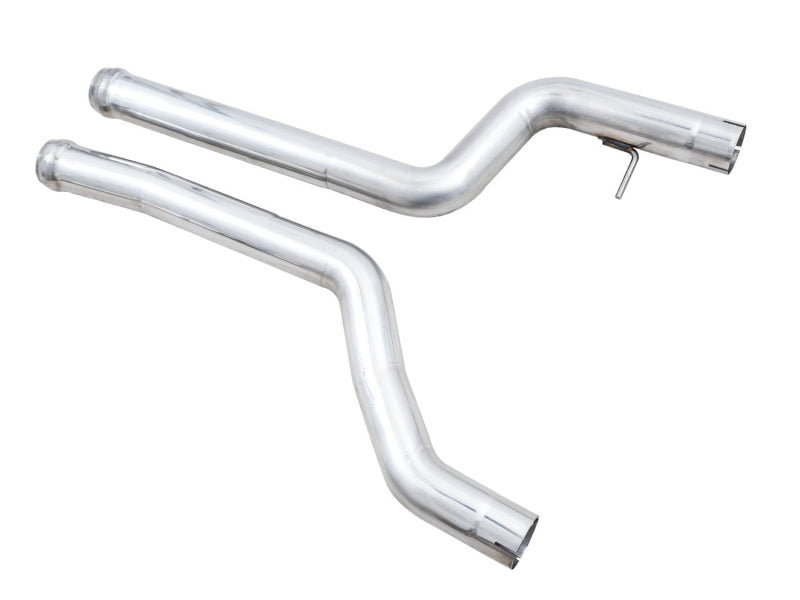
One important S58 quirk before we go further: when we say downpipes, we really mean downpipe + midpipe on the S58. It has two sets of cats, with the lower ones on the midpipes being the most restrictive. If you have to choose one or the other, swap the midpipe first. The downpipes alone will get you a small gain, but you don't unlock real exhaust flow until you also swap the midpipe or run a true cat-delete midpipe. So the staged approach for the S58 is a little different from how it works on the B58TU.

Stock-downpipe X3M on E50: the midpipe does the heavy lifting
Just a Tune (93 Octane)
Software only, on completely stock hardware. The S58 is heavily detuned from the factory, and a quality calibration on 93 pump gas alone wakes the car up significantly. With a custom tune from Racebox:

Completely stock G80 M3: stock vs 93 tune vs E50 on the Racebox Dynojet
That's a gain of 130–170whp over stock on a base car, and 80–150whp on a Comp. No hardware. No labor. Just a flash. This is genuinely the best return on dollar of any car in its price range, and below. New to all this? Read our Car Tuning 101 guide first for a primer on what a tune actually does.
Downpipes + Tune (93 Octane)
Add a set of aftermarket downpipes on top of the tune (Spool S58 downpipes for the M3/M4, or the X3M/X4M version). This isn't the same bang as just downpipes on a B58, but it does open up the path between the turbos and the midpipe. The gain is real but smaller than the typical "DP+tune" jump on other platforms:
About 20whp on top of tune-only. The bigger benefit is a more throaty exhaust and reduced restriction once you start pushing more boost on ethanol later. Most BMW cat-backs from the factory are 2.75 inches, so a full aftermarket exhaust isn't necessary for power on stock turbos.
Downpipes + Midpipe + Tune + E40
This is where the S58 really starts to come alive. Add a midpipe (single is our recommendation, 4 inch over 3.5 inch if available, resonated to keep the highway cruise tolerable; the AWE midpipe is one option), an ethanol content analyzer, and run an E40 blend. Now you've unlocked the best bang for buck in the entire industry:
Trap speeds in this configuration land in the 138–142 mph range. This is on the stock turbos, stock DI fuel system, and stock everything else. Just downpipes, midpipe, an ECA, and our calibration.

710whp on the stock DI fuel system: G80 M3, stock to E50
If you're going to run ethanol, you need to be monitoring your blend. We sell the MHD CAN Flex Fuel Kit, which we prefer for the ease of install and great pricing. The flex fuel kit lets our calibration adjust on the fly to whatever ethanol blend is actually in the tank, with safeties baked in if you overshoot. Ethanol also dilutes your oil faster, so drop your oil change interval to 3,000 miles max on any ethanol blend. The full breakdown is in our B58 & S58 Maintenance Guide.
Full Bolt-Ons + Port Injection (FBO + PI)
Once you're maxed out on the stock fuel system, the next step is full bolt-ons with port injection on E85. On the S58 we don't separate FBO and PI into two stages because the stock DI fuel system caps around 680whp on full E85, so if you're going to push past that you need port injection anyway. If you're interested, we made a video comparing full E85 vs E40 blends on Stock DI on our dyno.
This is the same process we run on the B58TU big-power builds (RK manifold, catch cans, port injection, LPFP), so if you've read that guide you already know the drill. One note on the intake manifold: the stock S58 manifold actually has great cooling characteristics, so unlike the B58 platform you're not gaining much by swapping it at this power level. We do swap it on full FBO + PI builds anyway to be thorough and to set the car up for big turbo later, but it's not the must-do mod some people make it out to be.
What FBO + PI Looks Like
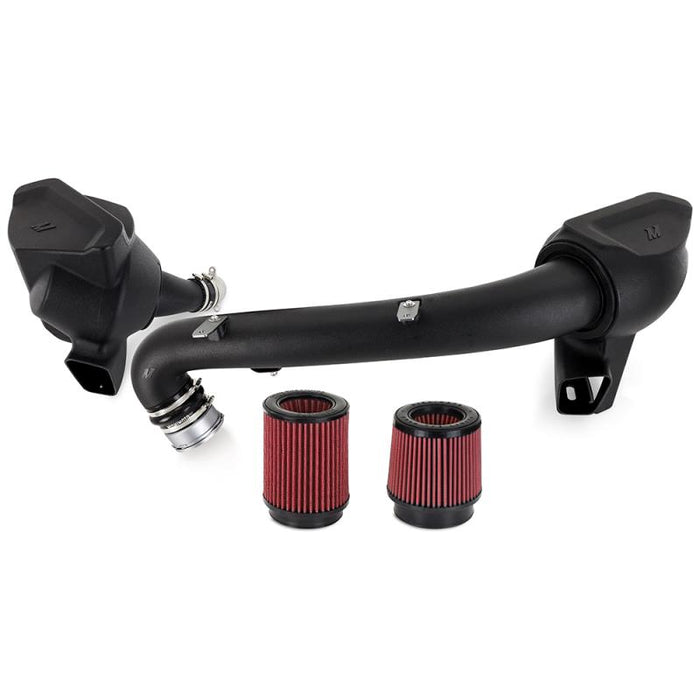
- Intakes - the stock intakes are good. Pull the charcoal filter and run BMC drop-ins for a clean number gain. Full intakes from AWE or Mishimoto are for sound and aesthetics, gains over a quality drop-in are minimal.
- Downpipes + midpipe - covered above. Catted downpipes with GESI 400-cell cats keep things tame. Single midpipe in 4 inch flows best.
- Charge pipe - the OEM piece is fine at stock boost, but as you go big turbo and up the boost levels you want an aluminum unit with T-bolt clamps.
- Intake manifold - optional at this stage. Stock cools well, but drilling for PI can be a pain. The RK Autowerks S58 manifold is our pick if you're going to do it; CSF, Do88, Wagner, Mishimoto, and VTT also make solid options.
- Catch cans / crankcase management - honestly this isn't as necessary as the B58s, the stock crankcase management is much better on the S58. But for completion's sake, we recommend the BMR S58 Catch Can.
- Flex fuel kit - mandatory.
- Transmission tune - xHP. The stock trans calibration leaves a ton on the table. xHP Stage 3 with drag mode is the quickest off-the-shelf setup.
- Engine tune - both MHD and EcuTek require sending your DME out for unlocking before flashing. You can hit up either Autotuner or FEMTO for this independently, or just go through us for the unlock.
- Port injection - this is what unlocks E85 power. The stock DI fuel system can't support more than ~680whp on full E85, so PI is what gets you past that without having to blend down for E40-E50. Our position on PI vs upgraded DI is simple: there is no reason to run upgraded DI when fully integrated, closed-loop port injection is available. Every customer who started with upgraded DI eventually sold them and switched. Every. Single. One.
The CAN-Bus Integration Rule
The single most important thing to understand about adding port injection on an S58: your tune must have CAN-bus integration. This means the DME can see what the port injectors are doing and maintain all of its safety features. If you run port injection without CAN-bus integration and a PI injector fails, the DME has no idea fuel delivery dropped. It keeps pushing boost and timing. The result is a melted piston and a $15,000+ problem.
MHD+ and EcuTek both support full PI integration with the Motiv ReFlex+. If you have an old DME unlocked before the "full unlock" for MHD, please just send it back and get the full unlock done so you can run MHD+. Don't skip this. Don't be cheap about it. It's the difference between a reliable 750whp car and a grenade.
PI Hardware
- PI controller - run the Motiv ReFlex+ with the Spool S58 plug-and-play harness.
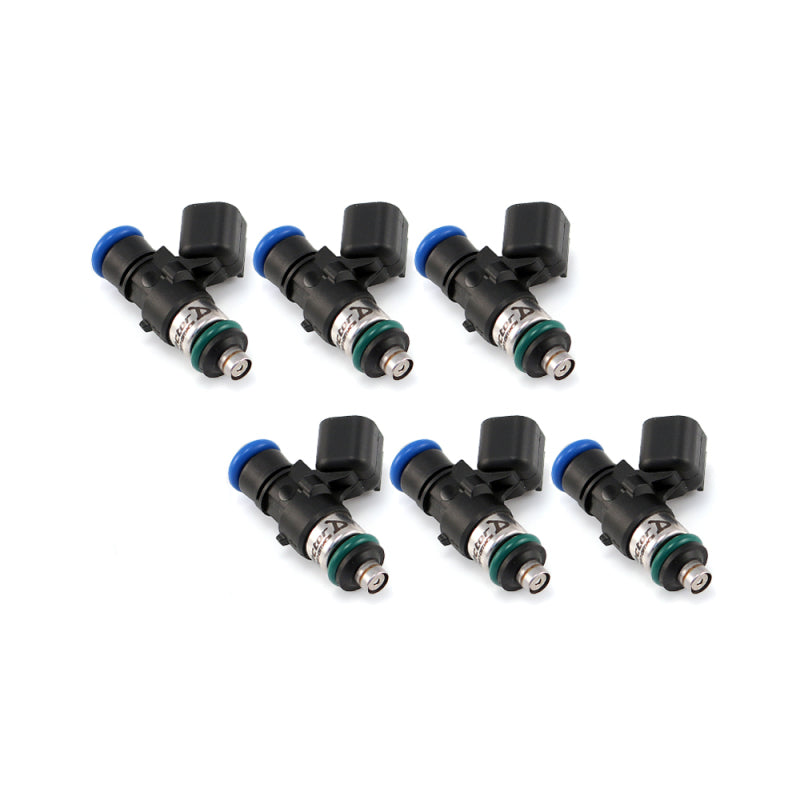
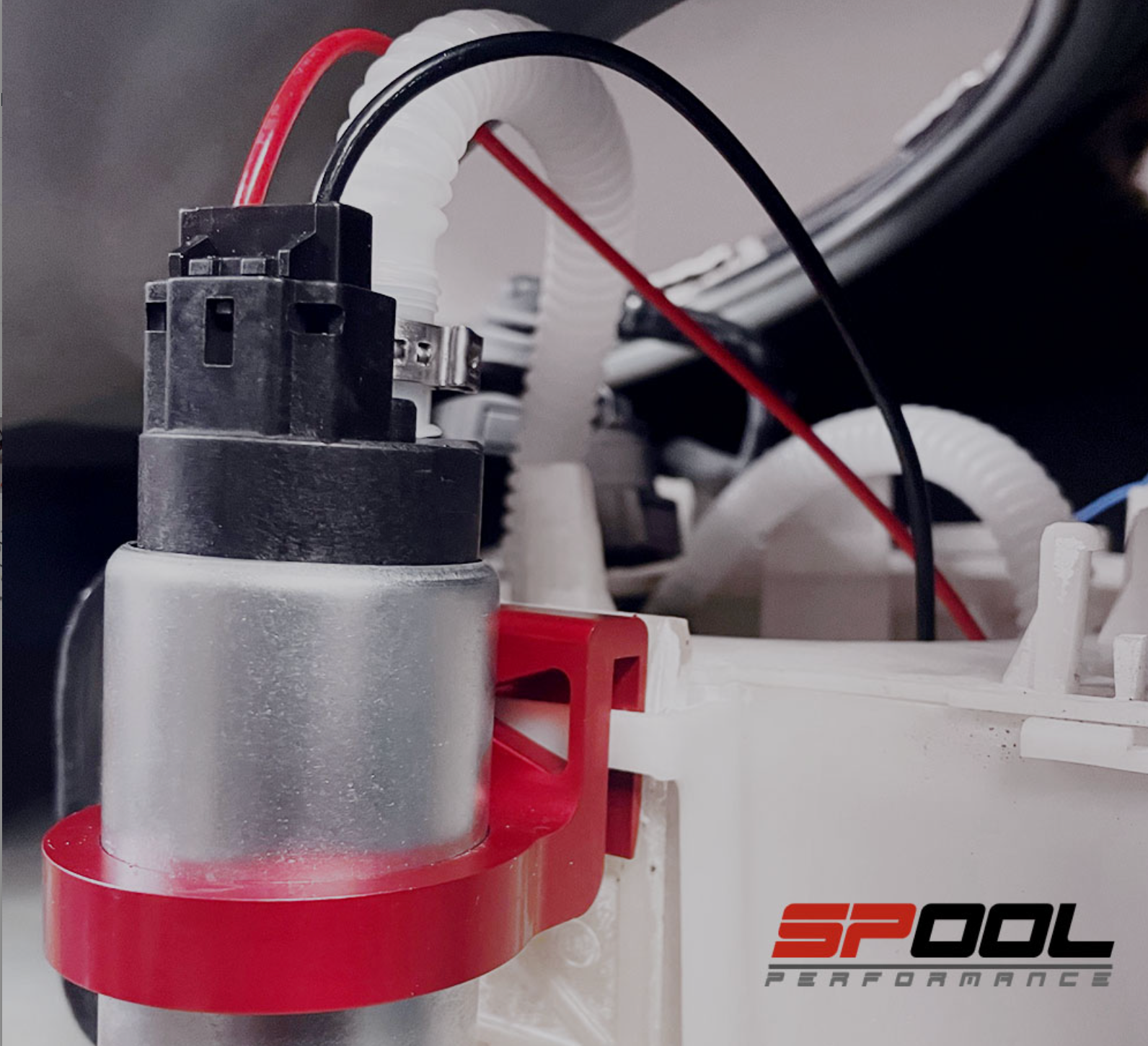
- PI kit and injectors - kits available from PR, PFS, RKAutowerks, and others. Skip the cheap shit and just get ID1050X. Buy once, cry once.
- LPFP upgrade - if you're going to be going big turbo, you might as well get a proper split feed LPFP for the PI system. We recommend the S58 Stage 3 LPFP or the PR AFS800 setup.
FBO + PI Performance Numbers
On full E85, full weight:
Trap speeds land in the 143–145 mph range. At this level you're smoking 99 percent of the cars you'll ever see on the street. The S58 at this power level is violent. It hooks, it pulls, and it doesn't stop pulling.
FBO + PI Cost Breakdown (on top of the stock-turbo basics)
| Item | Cost |
|---|---|
| Intakes (drop-ins or full) | $250–$1,000 |
| Charge pipe | $350–$600 |
| Catch can setup | $565 |
| PI controller + PnP harness | $1,500–$2,100 |
| PI kit + ID1050X injectors | $1,000–$1,600 |
| LPFP upgrade | $1,400 |
| Intake manifold (optional) | $3,000–$5,000 |
| Retune | $1,300 |
| Installation labor | $2,500–$3,500 |
| Total (incremental) | $8,800–$12,100 (add ~$5,000 if you're doing the intake manifold) |
Full Send: Upgraded Turbos
This is where the S58 becomes a completely different car. The stock twins are efficient but they're physically maxed around 750whp on ethanol with PI. Once you go bigger, the ceiling disappears.
The Fork: Hybrid Twins vs. Big Single
There are two ways to go past the stock turbos, and this is the biggest decision you'll make on the platform.
Hybrid twins are upgraded versions of the factory twin-turbo setup. They bolt into the stock twin location, keep the car streetable and simple, and get you to right around 800-850whp on E85. We usually recommend customers stay at 800 on hybrids; past that, a single is the way to go. If you're happy with that, this is the move. You keep the factory-style packaging, spool stays strong, and the supporting mod list is the exact same one you already know from the FBO + PI stage: RK manifold, catch cans, port injection, and LPFP. No tearing the whole hot side apart, no new down-pipe routing, no giant single turbo popping out for everyone to see before a race. We usually recommend the Spool hybrids, but note that hybrid turbos are happiest around 35-38psi. If you push for single turbo style numbers, eventually something will fail.

905whp stock-motor G82 M4 on Spool turbos and E85
A big single turbo is a full layout change and a completely different level of commitment. This is 800 to 1,500+whp territory, but it's a lot more money, a lot more labor, and a full re-plumb of the exhaust and intake side. You're swapping the entire turbo system over.
The honest advice: if you'll be happy at 800whp, run hybrid twins and keep your life simple. Only step up to a big single if you genuinely want the feel, sound, and power potential of a big single, and you're ready for the build and the bills that come with it. Unless you're prepared to spend an extra $10,000 or more, the hybrid twin path is where most people should stop and go enjoy the car.
Big Single Options
Single turbo setups range from 800 to 1,500+ whp depending on the turbo and supporting mods. They're laggier than the twins but have way more potential with a nice, climbing powerband to redline. Spool's S58 top-mount kit, RK Autowerks, BMR, KLM, and Doc Race are the single turbo kits we've installed the most.

910whp stock-motor G80 M3 with a PTE 7275 single
If you'd rather keep the twin-turbo layout all the way up, the Spool Performance full-frame upgraded twin turbo kit is the bolt-on twin path that pushes toward 1,000whp. VTT also makes solid twin options.
Supporting Mods for Upgraded Turbos
Whichever turbo path you pick, the supporting mods are the same core process as a big-turbo B58TU build (RK manifold, catch cans, PI, LPFP), plus a few items that scale with power:
- Fueling - the LPFP needs to step up. Best is a custom surge tank setup for max delivery and no starving under hard cornering. Better is an aftermarket external LPFP kit with quality lines and fittings. Also worth noting that you should always think about running an in-line filter. We've seen several clogged PI and DI injectors.
- Intake manifold - If you're spending the $10k+ on a turbo kit, might as well just get the manifold at this point. RK Autowerks, CSF, Do88, Mishimoto, and Wagner all make quality options.
- Catch cans - non-negotiable at this power level. Big boost means big crankcase pressure, and you want that oil vapor caught before it hits your intake. Get the BMR kit.
- Injectors - ID1050X for mid-power builds up to 1000whp. ID1300X for high-power, ID1750X for all-out setups. Size your injectors for your target power level and fuel type. Your tuner will tell you exactly what you need.
- Built transmission - the stock ZF 8-speed is good to about 750 wtq (better than the B58), but a big-turbo car will blow past that. Once you're over 750 wtq the stock trans will slip on the 5–6 shift and eventually fail. Pure Transmissions, Deka, and ATS all offer built packages. We also carry the Spool ZF 8HP70/75/76 Stage 2 DIY Kit for shops that want to build in-house, and this is also what we install on customer builds at Racebox HQ.
- Built motor - if you're targeting more than 850whp / 750wtq, get the motor built. The stock connecting rods and bearings are the weak link. There are plenty of S58s with holes in the block from exactly this failure. You can do drop-in rods with stock pistons, but our recommendation is the same as it's always been: if you're opening the motor, do it right. Rods, pistons, bearings, the works. Buy once, cry once. Reputable S58 motor builders include KLM and RKAutowerks.
Don't believe the Instagram hype. Most of the "stock motor 1,000whp" dyno cars never show up on a Dragy leaderboard because they either blow up or turn the power down for the street. If you want to make big power AND keep making it, build the motor.
Upgraded Turbo Performance Numbers
| Setup | Quarter Mile | Trap Speed | 60–130 MPH |
|---|---|---|---|
| Hybrid twins, stock motor + stock trans (~800whp) | 8.8-9.4 | 145-150 | 4.7-5.4 |
| Big single, stock motor + built trans | 8.5–9.0s | 150–155 mph | 4.3–5.0s |
| Big single, built motor + built trans | 8.0s or quicker | 155+ mph | 4.3s or quicker |
Upgraded Turbo Cost Summary
| Configuration | Total Investment |
|---|---|
| Hybrid twins or Big single, stock motor + stock trans | $25,000 |
| Big single, stock motor + built trans | $35,000 |
| Big single, built motor + built trans | $50,000+ |
What We Recommend

The Racebox shop G82 M4
For most S58 owners, the answer is simpler than the marketing makes it sound. A tune on 93 alone is a massive value. Add downpipes and a midpipe and run E40 and you're at 700-730whp on the stock fuel system. Total investment under $4,000 in parts, labor, and tuning, and the car is faster than 99 percent of what you'll see on the street.
If you want more, FBO + PI on E85 gets you to 740-760whp and a 5.5 second 60–130, and thanks to that strong stock ZF8 (good to ~750 wtq) you can do it all without touching the transmission.
Past that, the S58 gives you a genuine fork: hybrid twins get you to around 800whp while keeping the car simple and on the same supporting mods you already installed. A big single opens the door to 1,000whp+ but it's a full commitment in money, labor, and risk tolerance. If 800whp makes you happy, run the hybrids and don't look back.
Whatever level you're at, start with the fundamentals: maintenance, data logging, and a tuner you trust. Ready to get started? Check out our S58 tuning options. We handle everything remotely.
Questions? Hit us up. We respond within 24–48 hours, guaranteed.